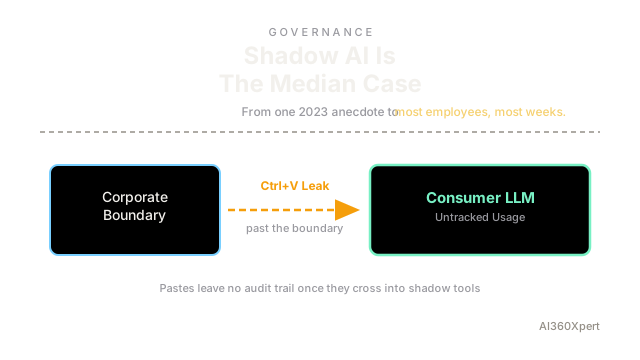
Shadow AI Is the Median Case
Why Does This Exist?
In 2023, the story of Samsung employees accidentally leaking proprietary source code into ChatGPT made global headlines. It was treated as a shocking anomaly, a cautionary tale that prompted knee-jerk bans across the Fortune 500.
By 2026, it is no longer an anomaly. It is the median case. Despite corporate policies and blocked domains, employees under pressure to deliver are quietly using unauthorized, consumer-grade AI tools to write code, draft emails, and analyze spreadsheets. The friction of the approved enterprise tools is too high, and the consumer tools are too good.
Think of It Like This
It is the BYOD (Bring Your Own Device) crisis of the 2010s, but entirely invisible. You could physically see an employee using a personal iPad in the office. You cannot see an employee opening an incognito tab on their home network to ask an LLM to debug a proprietary financial model.
How It Actually Works
When an employee pastes internal data into a consumer LLM interface, that data leaves the corporate boundary. Unless the user explicitly opts out, consumer terms of service generally allow the provider to use that input as training data for future models.
This creates a terrifying vector for data leakage. The LLM might eventually regurgitate a variation of that proprietary code or financial data to a competitor who happens to type the right prompt.
Security teams are responding by abandoning the outright bans—which failed—and adopting Zero Trust Data Layering. They use endpoint agents to monitor clipboard activity and intercept specific regex patterns (like API keys or internal domain structures) before they hit consumer AI domains. More importantly, they are deploying heavily monitored, fast internal inference endpoints to out-compete the consumer tools on UX.
Watch Out For
You cannot policy your way out of Shadow AI. If your internal, approved AI tool requires a VPN, a manager's approval, and has a 30-second latency, employees will bypass it. Security teams must treat UX as a security requirement, because friction drives users into the shadows.
(Correct as of August 2026).
The Quick Version
Shadow AI is rampant because approved enterprise tools are often too slow or restricted. Employees routinely leak proprietary data to consumer LLMs, forcing security teams to shift from outright bans to endpoint interception and better internal UX.