Visual explainer
Convolution Operation
How one small kernel slides over an image and writes a feature map, with every number shown.
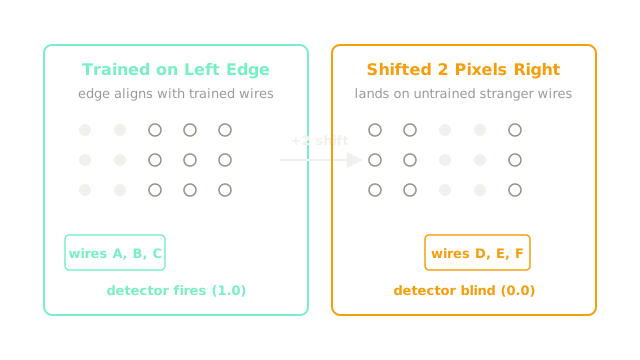
Wire every pixel to its own weight and an edge at the left is learned on wires A, B and C. Slide that edge two pixels right onto wires D, E and F, which never trained. Your detector goes blind.
Nine Weights, One Job
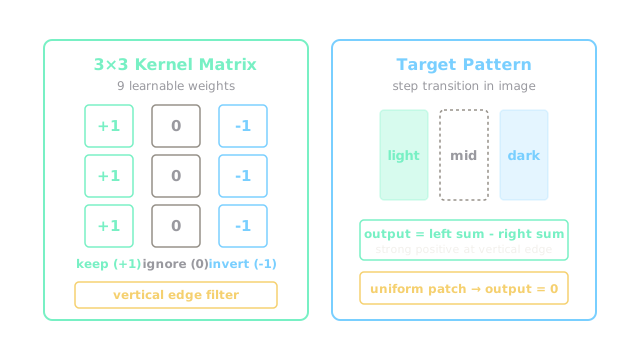
Shrink the job to nine numbers: keep the left column, skip the middle, subtract the right. A big answer means a vertical edge sits under the window. Those nine weights are the whole detector you will reuse.
Multiply, Add, One
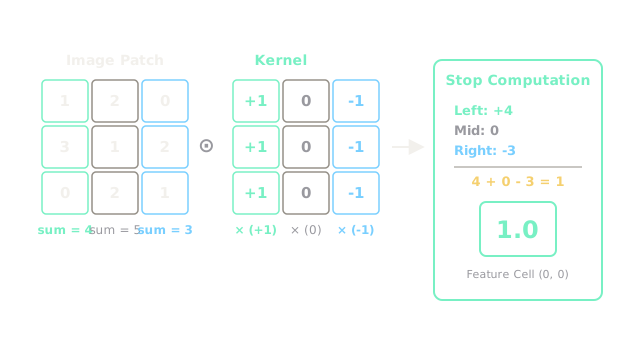
Lay the kernel on the top-left patch and multiply each pair. The left column totals 4, the right totals 3, the middle is skipped, so 4 minus 3 gives 1. That single number is one cell of your new map.
Nine Stops, Nine Answers
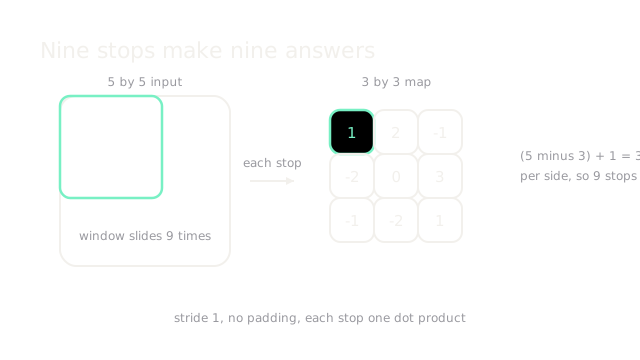
Slide the window across all nine stops with stride 1 and no padding. Five minus three plus one gives three stops per side, so nine answers fill the map. The cell you just computed sits top-left, circled.
Found It Twice
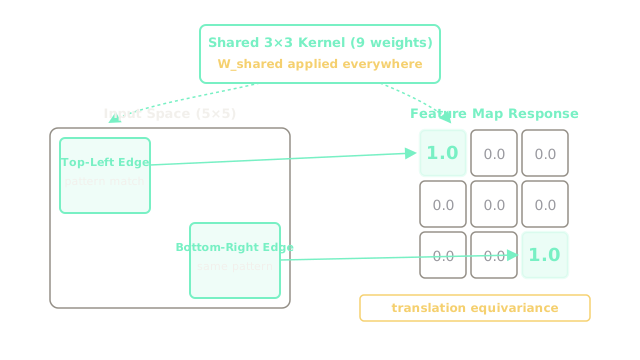
Here is the payoff for sharing. The identical nine weights answer 1 at the top-left edge and 1 again where the edge reappears. Position changed, response did not. That is translation tolerance earned, not claimed.
Shrink Or Preserve
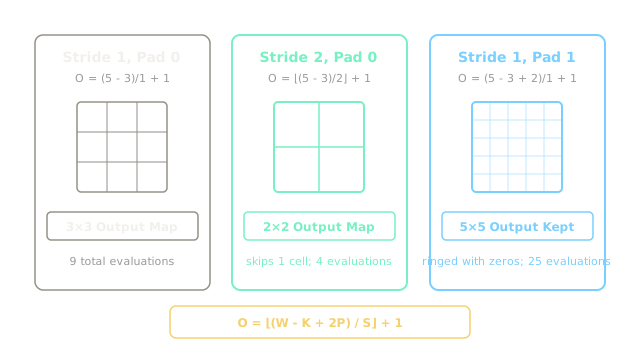
Stride 2 skips stops and shrinks output to 2 by 2, saving compute. Padding 1 rings the input with zeros and preserves the full 5 by 5. You pick shrinking for speed and padding when every pixel must survive.
Where It Breaks
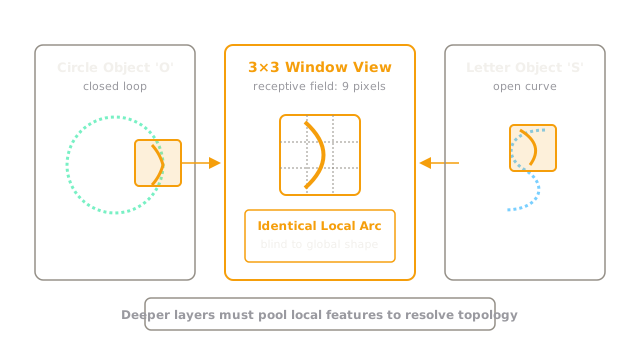
Nine pixels cannot hold global shape. One curve bit could belong to a circle or an S, and the window guesses either way. Only deeper layers, pooling many such bits, resolve the owner.
The Quick Version
- Dense wires go blind after a two-pixel shift.
- Nine weights hunt one edge: left minus right.
- First stop reads 4 minus 3 equals 1.
- Nine stops fill a 3 by 3 map.
- Same kernel answers 1 in two places.
- Stride shrinks output; padding preserves size.
- Nine pixels cannot name the whole shape.