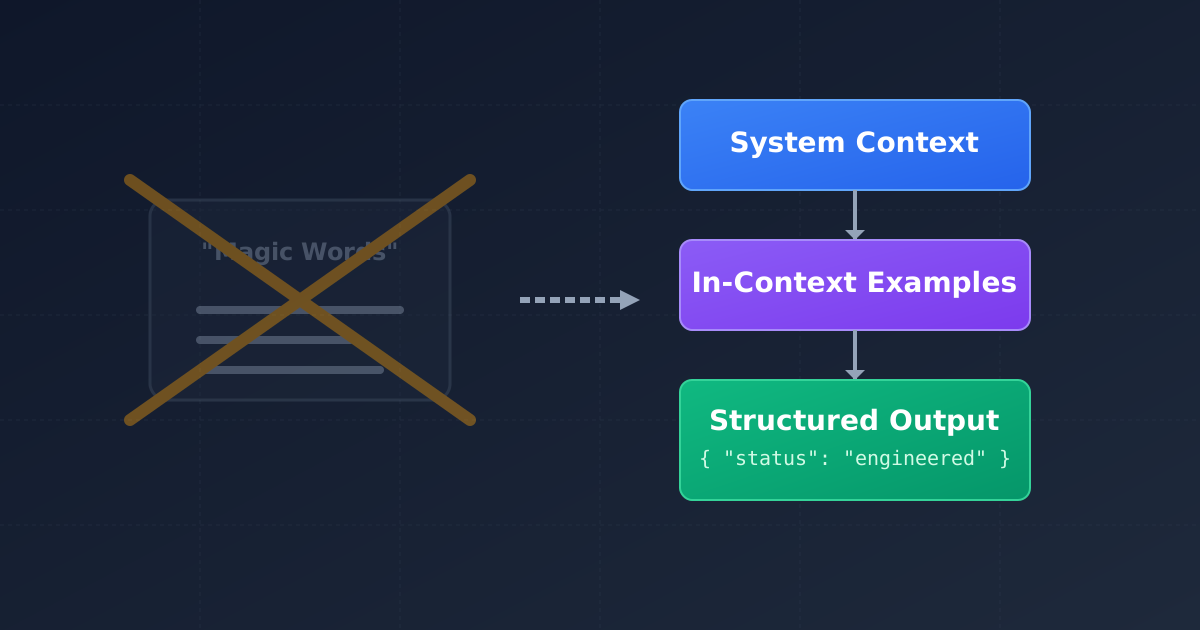
Stop Treating Prompt Engineering Like Magic Words
The "Magic Word" Era is Over
In the early days of generative AI, the community treated prompts like incantations. We appended "take a deep breath and think step by step" to the end of a query, hoping the model would suddenly manifest reasoning abilities. A single, brittle string of text carried the entire burden of defining the task, providing the context, and dictating the format.
That approach doesn't scale. As of late 2026, building reliable AI systems is no longer about finding the perfect phrasing to trick a model into compliance. Prompt engineering has evolved into rigorous software engineering.
From Strings to Systems
The shift is fundamental. Instead of a monolithic block of text, modern AI interactions are built on structured system prompts that define strict boundaries and roles.
We've moved away from begging a model for consistency and instead rely on structured outputs using JSON schema enforcement. We don't just dump all our requirements into one prompt; we use prompt chaining to break complex tasks into smaller, verifiable steps, where the output of one model call becomes the heavily structured input of the next.
Show, Don't Tell
The most significant evolution in technique is the formalization of in-context learning. Rather than exhaustively describing a task, robust prompts use extensive few-shot prompting. They provide concrete, carefully curated examples of inputs and desired outputs, effectively fine-tuning the model in the latent space at inference time.
Similarly, the raw "think step by step" has been replaced by explicit, structured chain-of-thought reasoning pathways, sometimes enforced by the very API we are calling (as seen with reasoning models that inherently expect structural separation between their reasoning and output phases).
The Quick Version
If your AI system relies on an intricately worded "hack" to function, it's brittle. The most effective prompt engineering techniques today focus on structured data, rigid contexts, robust chaining, and rich in-context examples. Treat your prompts like code, version them like code, and engineer them for reliability.
(Correct as of September 2026).