FFHQ High Quality Faces
High-resolution varied faces with broad age and accessory coverage, the clean source behind modern face generators.
Why Does This Exist?
Low-resolution faces cap generator detail at blurry eyes and teeth. High-quality synthesis needs aligned, varied, high-resolution sources. FFHQ gathered high-resolution faces with age, ethnicity and accessory breadth, becoming the training source for generative faces.
This page covers quality contract and appropriate use. Generation scoring links to FID-style quality work once written.
Think of It Like This
A portrait studio archive
Low sets are passport booth snaps. FFHQ is a studio archive with sharp lenses, varied sitters and consistent framing.
Generators trained there learn pores and strands, not just face blobs.
How It Actually Works
Purpose is high-fidelity face generation and editing. Input is a high-resolution face photo, outputs depend on the generative task. Appropriate use is generator training and inversion research with consent and misuse review. Say less about exact counts and verify the official release before quoting them.
Toy resolution walkthrough
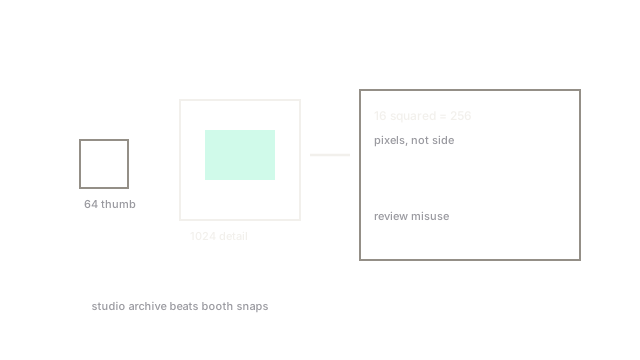
Take 64 versus 1024 side length. Pixel count ratio is . That 256-fold detail gap is why thumbnails cannot teach fine generators.
Code
Pixel-count scaling that prices resolution.
def pixel_ratio(a: int, b: int) -> float: return round((b / max(a, 1)) ** 2, 1)
print(pixel_ratio(64, 1024))# -> 256.0Side grows 16-fold, pixels 256-fold.
Watch Out For
Generating real-looking faces without consent review
High fidelity enables impersonation. The symptom is a demo that harms. Fix it with use review, watermarking and no real-person targets.
The Quick Version
- FFHQ maps high-resolution face photos to generative training for detail.
- Input is a sharp varied face, task outputs vary by synthesis goal.
- Toy 1024 versus 64 gives 256 times the pixels.
- Use it for face generator training and editing research.
- Verify release officially and review misuse before sharing.