Epipolar Geometry
How two cameras constrain the search for matching 3D points down to a 1D line.
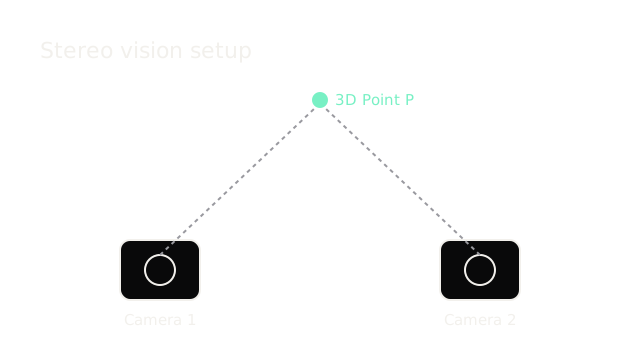
When two cameras look at the same 3D scene, a single 3D point projects onto both image planes.
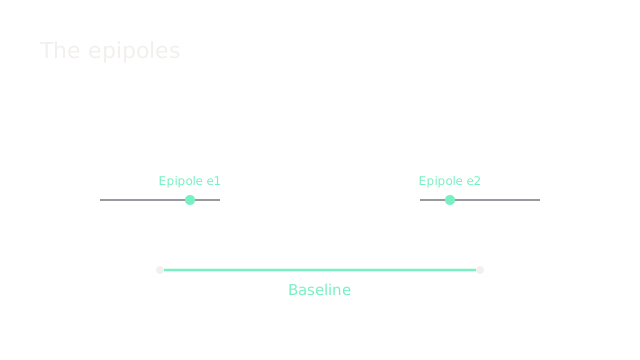
The line connecting the two camera centers is called the baseline. Where this baseline intersects each image plane is the epipole. It's essentially the projection of the other camera's center.
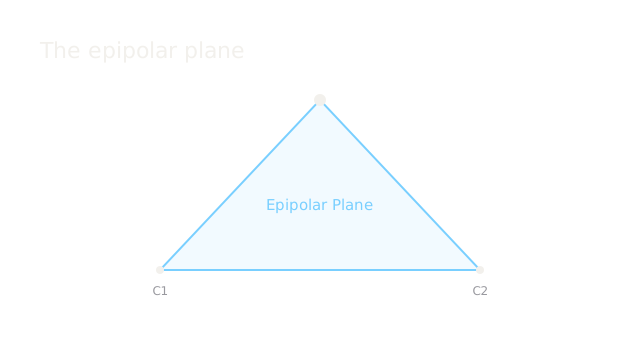
The 3D point and the two camera centers define an epipolar plane.

Because of this geometric relationship, if you find a point in Camera 1, its match in Camera 2 must lie along the intersection of the epipolar plane with Camera 2's image plane. This turns a difficult 2D search problem into a simple 1D search along the epipolar line.