Optical Flow
Estimating the apparent motion of objects across consecutive video frames.

When recording a video, consecutive frames capture the scene separated by a tiny fraction of a second. Objects that move in the physical world will shift their position slightly between frame t and frame t + 1.
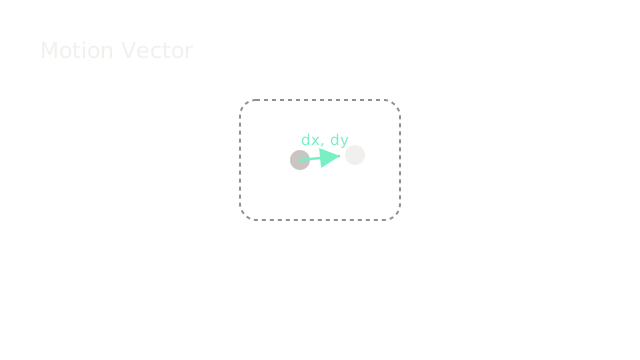
Optical flow aims to measure this apparent motion. By finding where a pixel in the first frame has moved to in the second frame, we compute a motion vector (dx, dy).
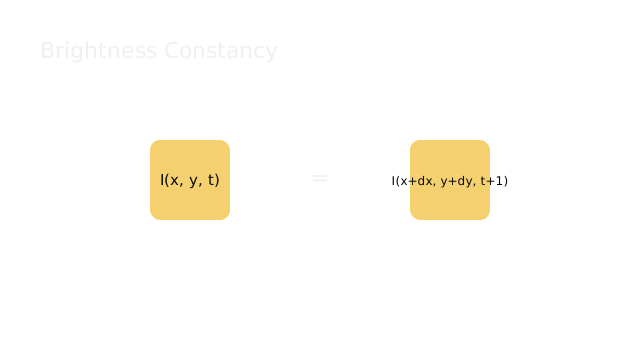
The core assumption making this possible is brightness constancy: the assumption that an object's pixels keep the same intensity as they move from frame to frame.
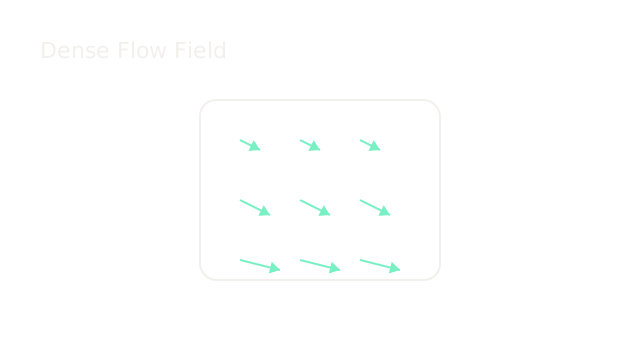
When computed across the entire image, optical flow gives a dense vector field. This field reveals not only object movement, but also the camera's own motion (egomotion) through the 3D environment.