Visual explainer
Knowledge Distillation
Big teachers cannot fit on phones. See how softened odds carry hidden structure into a small student that ships.
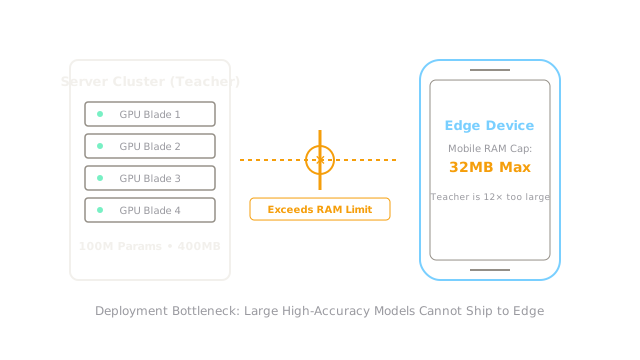
Your giant teacher nails answers but needs a server rack. Phones and cheap boxes cannot hold it. You need its brain inside a body that actually ships.
Soft Labels Carry Structure
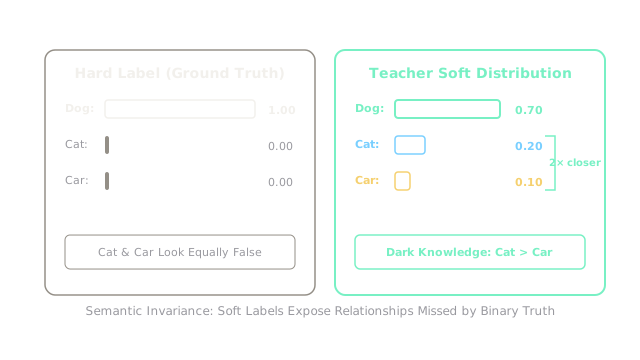
Hard labels call a dog 1 and all else 0. Soft labels spread small odds: dog 0.7, cat 0.2, car 0.1. That spread hides dark knowledge about which wrong answers look alike.
Soften With Real Numbers
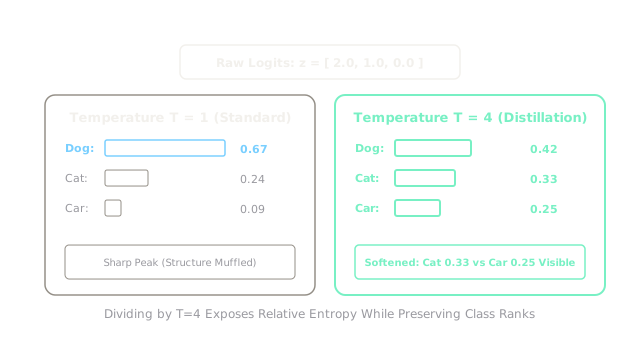
Here is the focal math. Logits 2, 1, 0 at temperature 1 give sharp odds near 0.67, 0.24, 0.09. Divide by 4 first and they soften to 0.42, 0.33, 0.25. Hidden structure now shows.
Student Copies Soft Odds
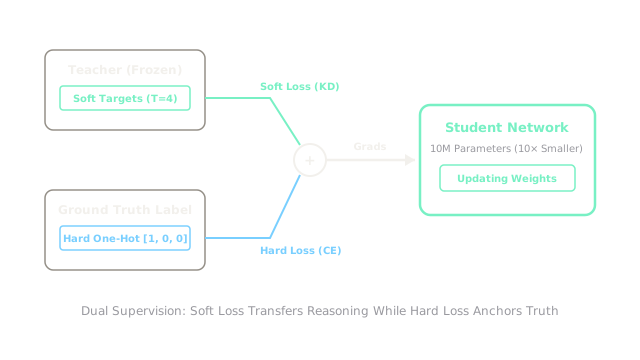
Freeze your teacher and let your small student study its softened odds. Mix in a few hard labels so truth anchors the copy. The student copies reasoning instead of final picks alone.
Same Accuracy Smaller Body
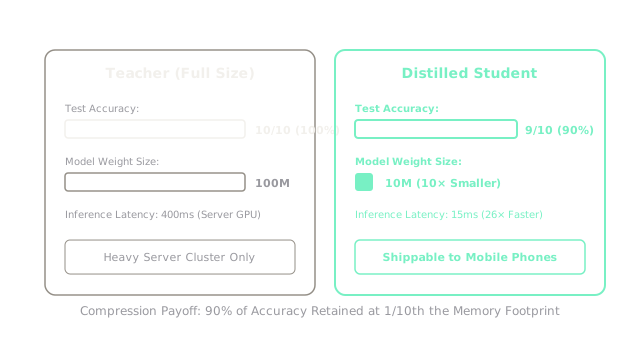
Same test, smaller body. Teacher calls 10 of 10 right at full size while your student calls 9 of 10 at one tenth the weights. That kept accuracy inside a shippable body is the whole payoff.
Dial Temperature With Care
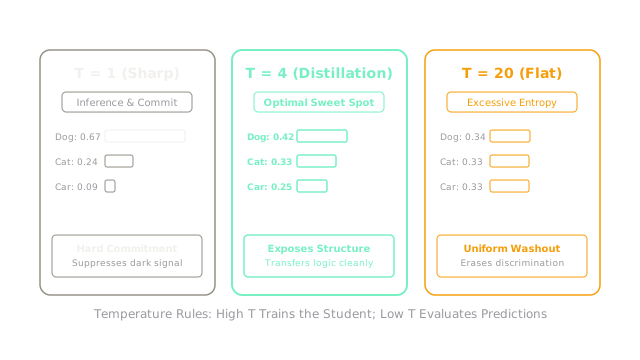
Raise temperature near 4 when wrong-answer structure matters most. Lower it toward 1 when your student must commit sharply. Flip high only while soft odds still guide better than hard ones.
Where It Breaks
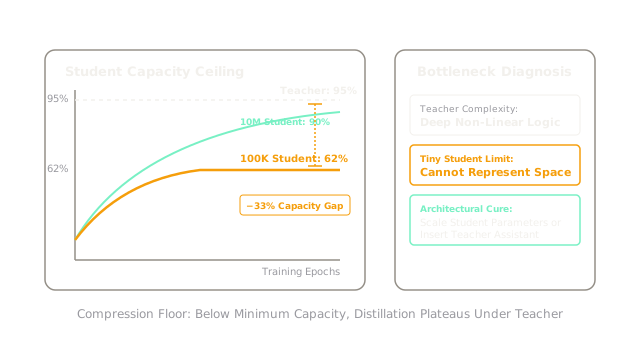
Small bodies cap learning. Below some size your student cannot hold the teacher logic, and gaps stay stuck. When scores plateau far under the teacher, your student needs more capacity itself.
The Quick Version
- Giant teachers cannot ship on phones.
- Soft labels reveal wrong-answer structure.
- Temperature 4 softens odds to study.
- Students copy soft plus hard targets.
- Small bodies keep most accuracy.
- High temperature reveals, low commits.
- Tiny students still cap below teachers.