Visual explainer
Learning Curves
Plot training error against held out error as data grows, and the gap tells you whether to buy labels or add muscle.
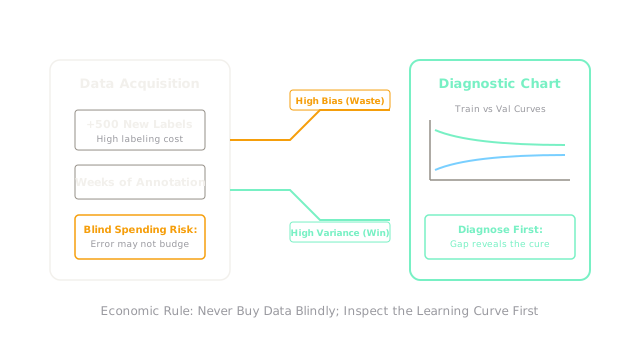
Five hundred new labels cost weeks of work, yet sometimes error refuses to move. Buying data before diagnosing burns budget on the wrong cure. You need a chart that names the disease first.
Two Lines
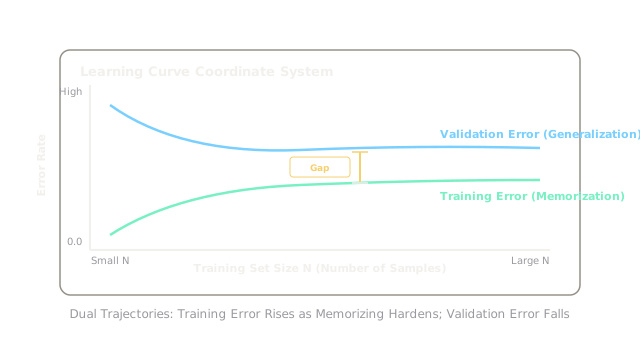
Draw training error beside held out error as data grows. One line shows memorising, the other shows generalising, and the space between them is the diagnosis. Learn to read that gap and you stop guessing.
Flat And High
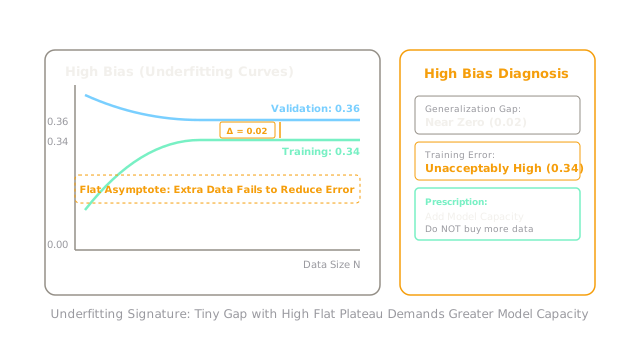
A line cannot learn curves. Training stalls at 0.34, held out at 0.36, and tripling the data moves neither. The gap is a tiny 0.02, yet both lines sit far too high. More examples cannot teach flexibility.
Wide Gap
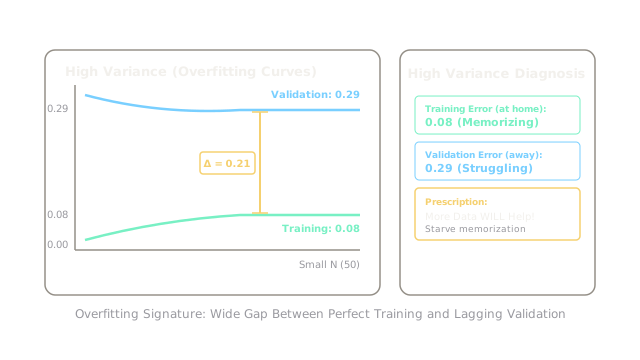
A giant model recites instead of understanding. It scores 0.08 on training and 0.29 on fresh data, leaving a 0.21 gap. Low at home, lost away: the signature of memorisation over pattern.
Data Closes Gaps
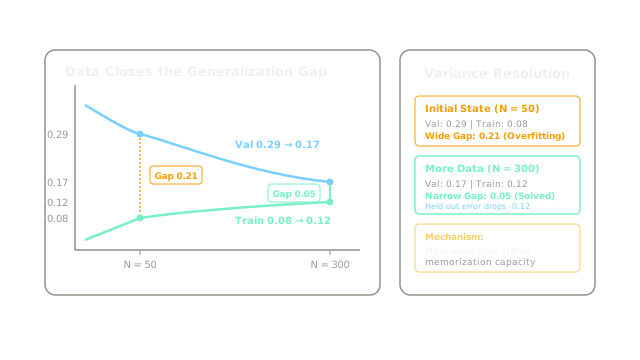
Same model, more examples, and the story heals. At 300 points training reads 0.12 and held out 0.17, narrowing the gap to 0.05. Memorisation starves when examples outnumber hiding spots.
Prescribe Right
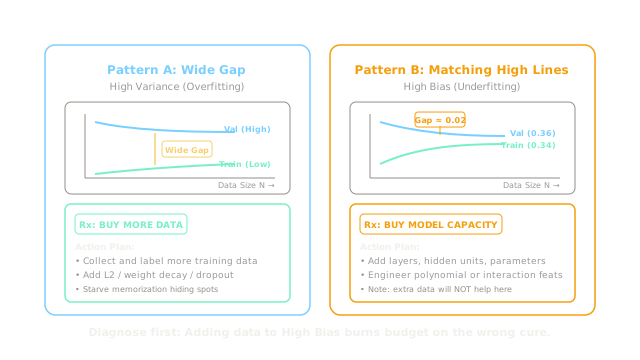
Let the gap prescribe. Wide gap with low training error means buy data. Matching high lines mean buy muscle: layers, features, training time. Habit says always add data; the chart often disagrees.
Where It Breaks
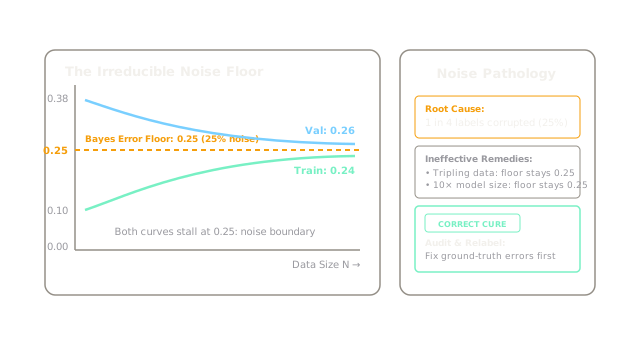
Sometimes the labels themselves lie. With one in four tags wrong, both lines sink to 0.25 and rest there forever. Neither data nor muscle crosses a noise floor. Fix the labels before buying more of them.
The Quick Version
- Labels cost money, cures vary.
- Plot memorising beside generalising.
- Flat high lines need bigger models.
- Wide gaps need more examples.
- Data dragged 0.29 down to 0.17.
- The gap picks your prescription.
- Noise floors stop both remedies.