Visual explainer
Loss Functions
How a network scores its own mistakes so gradients know which way to push.
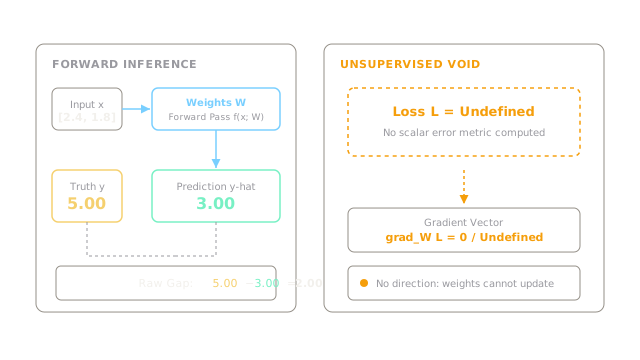
You get a prediction and a truth but no grade. Without one number that says how bad you were, backprop has no slope to follow. You pick the ruler before you train.
Square Big Misses
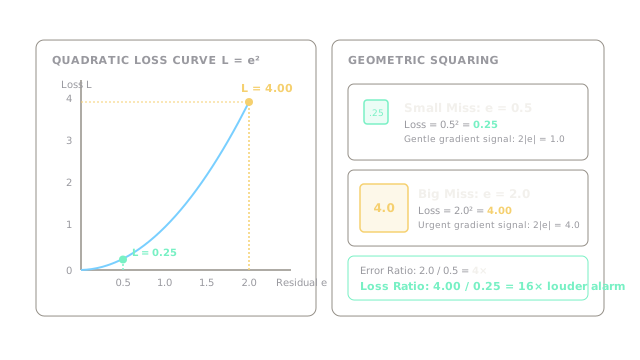
You subtract truth from prediction, then square it. A miss of 2 becomes 4 while a miss of 0.5 becomes 0.25. The big miss now shouts sixteen times louder than the small one.
Punish False Confidence
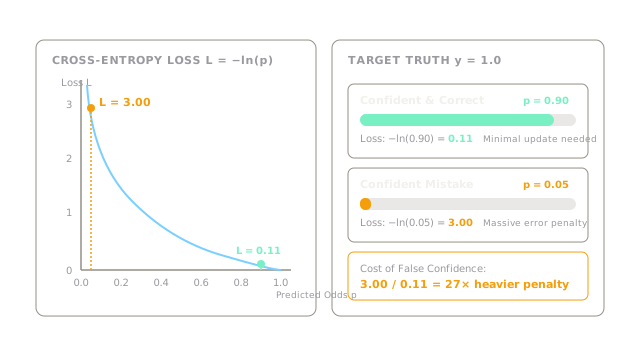
Truth is 1 but you said 0.05, so loss is minus log 0.05, which is 3.00. Had you said 0.9, loss would be 0.11. Cocky and wrong pays twenty seven times more.
Flat Absolute View
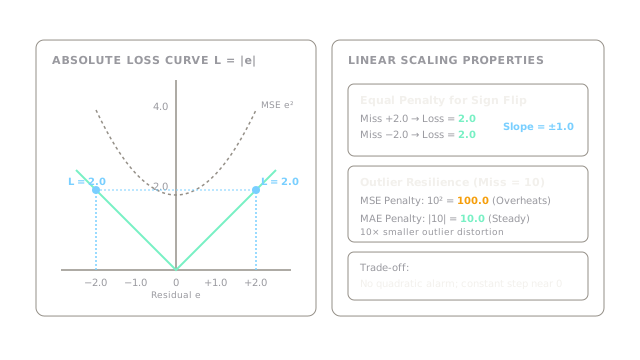
You drop the square and take distance only. Misses of 2 and minus 2 both cost 2.0. Outliers stop yanking you, but you lose the loud alarm squared error gives.
Right Ruler Learns
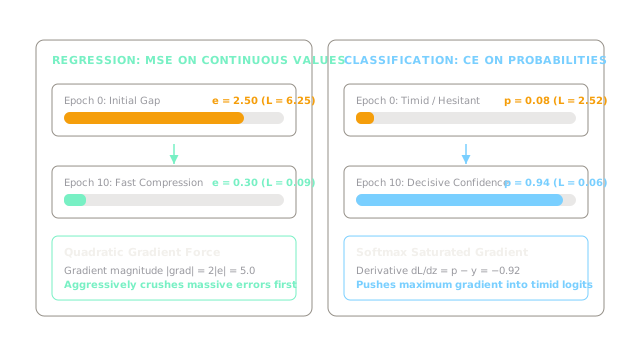
Train one head with squares on prices and one with cross-entropy on odds. Price errors above 2 collapse fast while timid odds sharpen quickly. Each loss fixes its own kind fastest.
Match Loss To Task
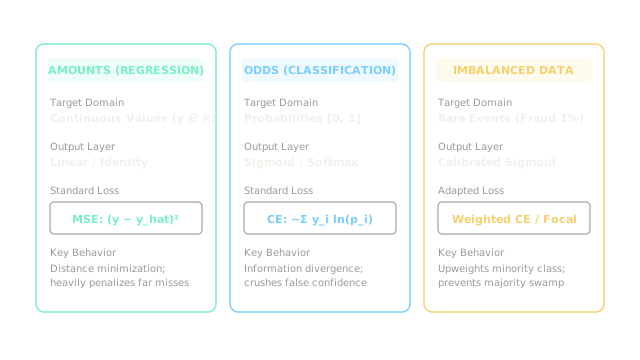
You reach for squared error when you predict amounts. You switch to cross-entropy when you predict odds. Flip when your classes unbalance, then weight the rare class higher.
Where It Breaks
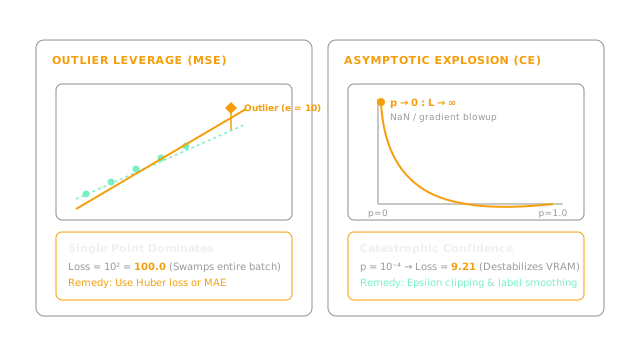
One bad label with error 10 costs 100 and drags your line. One confident 0.01 on truth 1 costs 4.61 and shakes training. You clip, clean, or reweight before you trust either.
The Quick Version
- No grade means no gradient to follow.
- Miss 2 becomes loss 4.
- Miss 0.5 becomes loss 0.25.
- Odds 0.05 on truth cost 3.00.
- Odds 0.9 on truth cost 0.11.
- Squares for amounts, logs for odds.
- Outliers and cocky misses distort training.