Visual explainer
Momentum
Plain steps zigzag across valleys while a velocity sum cancels sideways noise and dives forward.
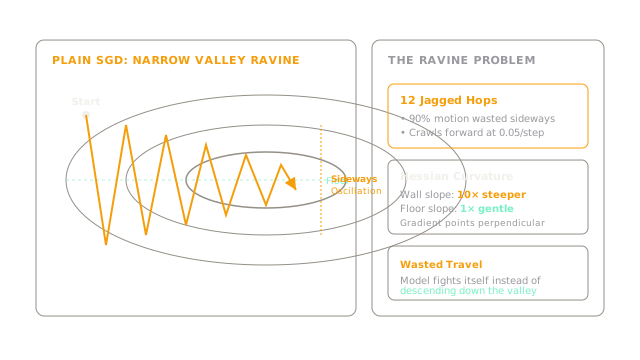
You follow the steepest slope and it throws you wall to wall. Twelve steps swing sideways while barely moving down the floor. You waste motion fighting yourself instead of descending.
Keep Past Motion
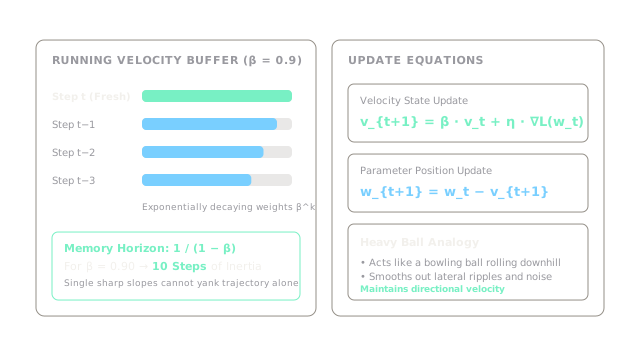
You keep a velocity that remembers where you went. Each step adds a slice of the new gradient to most of the old motion. One sharp slope cannot yank you alone now.
Add New Push
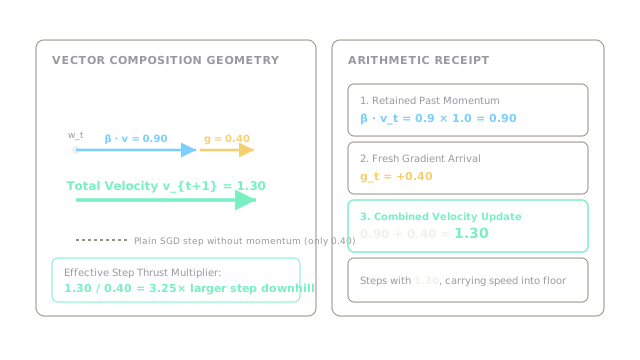
Beta is 0.9 and old velocity is 1.0, so you keep 0.9. New gradient is 0.4, so velocity becomes 1.3. You step with 1.3, not 0.4, and carry speed downhill.
Cancel The Sway
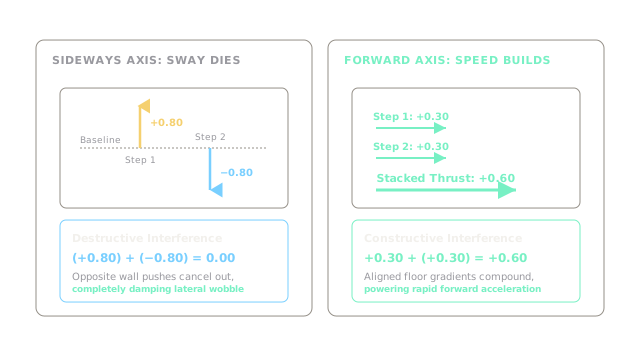
Walls push plus 0.8 then minus 0.8, which sums to zero across two steps. Floor pulls plus 0.3 twice, stacking to 0.6. Sway dies while forward speed builds.
Smooth Dive Wins
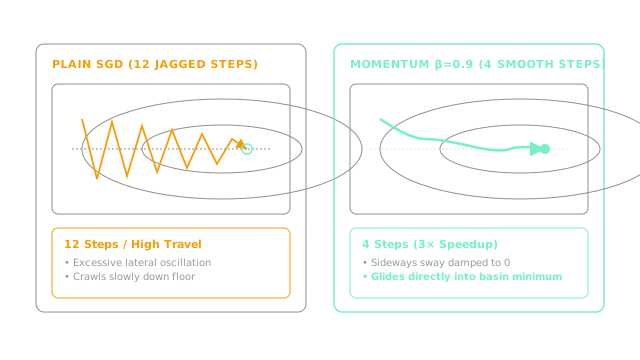
Walk the same valley on one scale. Plain steps need twelve jagged hops while velocity needs four smooth ones. Same start, same depth, but far less wasted travel.
Tune Beta Carefully
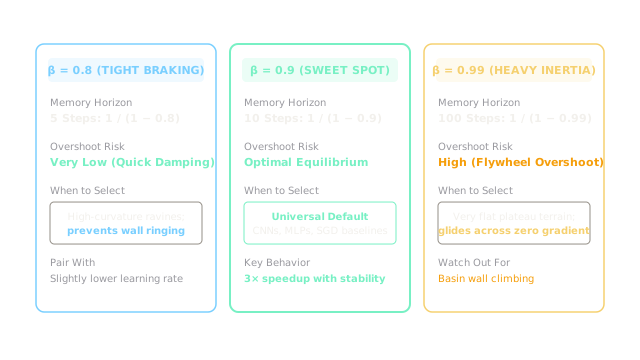
You start beta at 0.9 since it suits most valleys. When loss swings past the floor, you drop to 0.8 and pair it with a smaller rate. Flip up only when progress crawls.
Where It Breaks
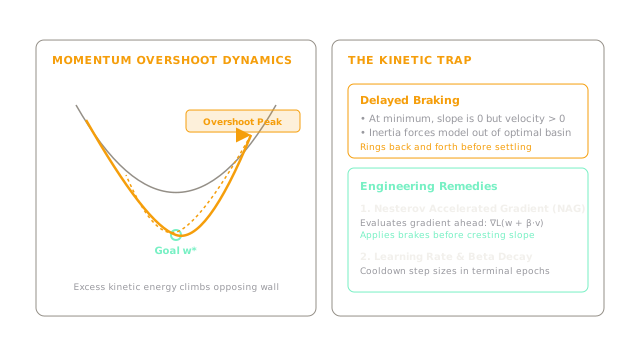
Speed that helped downhill now hurts at the bottom. You cross the floor, climb the far wall, and swing back. If swings grow, you cut beta and brake earlier.
The Quick Version
- Plain steps zigzag twelve times sideways.
- Velocity remembers your past path.
- Gradient 0.4 grows 0.9 into 1.3.
- Sway cancels to zero total.
- Forward pulls stack to double.
- Four smooth steps beat twelve jagged.
- Too much speed overshoots the floor.