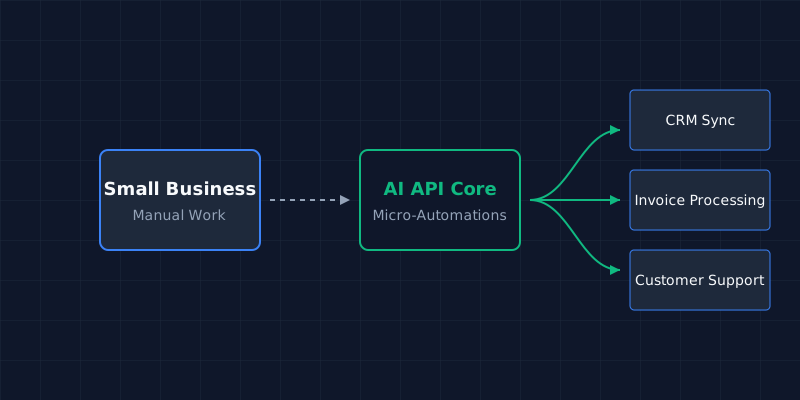
Stop Treating AI Like a Toy: The Pragmatic Shift in Small Business Automation
Let's talk about the real winner of AI automation. It isn't the Fortune 500 company saving 3% on customer support costs. It's the five-person accounting firm that just replaced a 40-hour weekly manual workflow with a script that costs $15 a month.
The Disconnect Between Enterprise and Main Street
LLMs have spent the last three years trapped in a hype cycle. Big enterprises try to deploy massive, monolithic RAG architectures, getting tangled in corporate bureaucracy and compliance. Small businesses don't have that luxury. They operate closer to the metal, where margins are razor-thin and every hour of manual data entry represents a direct threat to survival.
For a local law firm or independent e-commerce shop, automation isn't about "digital transformation" — it's about not having to work until 2 AM on a Saturday.
Micro-Automations Are the New Moat
The secret sauce isn't building custom models; it's stringing together off-the-shelf capabilities. A simple tool use integration connecting a standard model (like GPT-4o) to an inbox and a CRM can automate invoice sorting, draft standard client replies, and flag urgent issues without human intervention.
These "micro-automations" are brittle in theory but incredibly robust in practice because the business owner is in the loop. When a failure happens, they see it immediately and fix the prompt.
The Era of the "AI-Native" Mom and Pop
As of September 2026, the barrier to entry has evaporated. You don't need a machine learning engineer to automate your inventory. You need an API key, basic scripting (or no-code tools), and an afternoon of trial and error. The businesses that embrace this aren't just saving time; they're creating a permanent structural advantage over competitors who still process PDFs by hand.
Stop waiting for the perfect enterprise-grade agent. Build the messy, pragmatic script that gets you your weekend back.
(Correct as of September 2026).