Deformable DETR Samples Sparse Points
Deformable attention samples four points per scale around each query, so multi-scale detection trains in 50 epochs not 500.
Why Does This Exist?
DETR attends densely, so high-res maps blow up and small objects blur. Training drags to 500 epochs.
Sparse sampling fixes both. It follows detr queries, reuses object detection matching, and feeds later transformer detectors.
Think of It Like This
Inspectors checking four nearby houses
Instead of searching the whole city per case, each inspector checks four houses near the tip address across four district maps. Nearby evidence suffices.
Reference points are addresses, offsets are nearby houses. Where it stops: tips far off mislead locals, just as bad references miss displaced boxes.
How It Actually Works
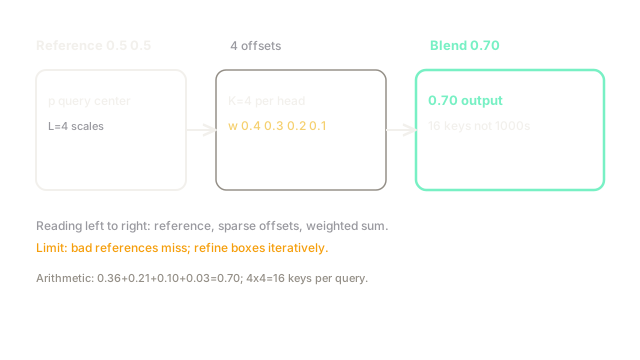
Each query has reference in . For scales and points, predict offsets and weights summing to 1. Sample by bilinear and blend. Cost drops from to .
Worked example
Query at on map. Offsets sample . Weights blend values to . Sixteen keys replace thousands.
Watch Out For
Init offsets to zero and stalling refinement
Zero offsets sample one spot repeatedly early. Symptom: slow first 10 epochs. Fix: small random init plus iterative box refinement so references migrate.
The Quick Version
- Deformable samples points per scale, keys per query.
- Reference plus learned offset keeps sampling local and sharp.
- Fixture blend from four neighbors.
- Training falls from 500 to 50 epochs with better small objects.
- Init offsets with spread plus refinement to move references.