Industrial Vision
Industrial vision watches factory lines with fixed cameras and harsh lights to catch bad parts fast, turning line speed into a vision specification.
Why Does This Exist?
A line that builds a part every seconds cannot pause for a human loupe. Defects cost recalls, missed screws cost returns, misread labels cost fines. Office vision assumes varied scenes and forgiving latency. Factory floors fix the scene and punish delay.
Industrial vision exists as the line aware umbrella. Input is a triggered image under controlled light plus encoder position. Output is a pass or fail decision with a reason, inside the takt budget. The decision skill is object detection; the reading skill is optical character recognition. The sorting skill is image classification.
Use it when the camera, light, and part position are yours to fix. Use flexible scene models when the world refuses fixturing.
Think of It Like This
A bouncer with a checklist and a stopwatch
A club bouncer checks ID, stamp, and dress code in seconds per person, same three checks in the same order, with a lamp fixed over the door. Regulars get waved fast because the pattern is known.
The trigger is the door knock, lighting is the fixed lamp, the recipe is the checklist. The analogy stops at mercy: the bouncer can bend a rule, while the line model must hold spec even when the shift supervisor pleads.
How It Actually Works
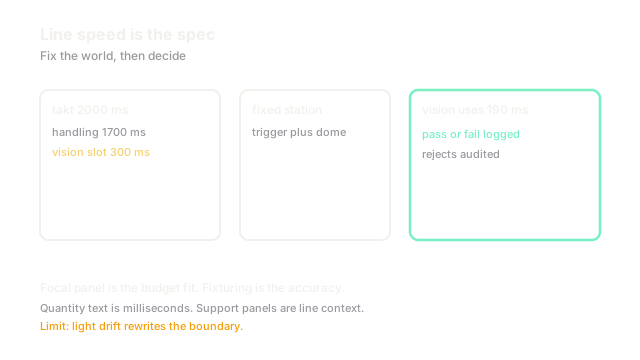
Fix the world first: mount the camera rigidly, dome or bar light the feature, trigger on encoder so each part lands on the same pixels. Budget time backwards from takt: ms takt may leave ms for vision after handling. Run the chain of locate, then measure or classify, then decide against spec limits. Log every reject with its image crop so quality can audit the threshold weekly.
Worked example
A cap line runs parts per minute, one every ms. Handling eats ms, leaving ms for vision. The model needs ms, lighting settle ms, and messaging ms, totaling ms inside budget. At good parts per , a percent false reject rate scraps good parts per , which the plant sees before any missed defect math.
Watch Out For
Lighting drift that moves the decision boundary
A new skylight or a dusty dome shifts brightness by levels across a week. The model read that shift as dents. The symptom is reject rate creeping with time of day. Fix it with enclosed lighting, reference tiles each shift, and brightness normalized features.
Lab accuracy that ignores takt and handling
A percent accurate model at ms still fails a ms slot and backs the line up. The symptom is perfect offline scores plus line stops. Fix it by speccing latency and false reject cost first, then picking the model that fits the slot.
The Quick Version
- Industrial vision decides pass or fail inside the line takt time.
- Fixed camera plus controlled light plus encoder trigger come before models.
- The fixture fits ms of vision inside a ms vision slot.
- False rejects cost real parts; track them alongside missed defects.
- Enclose light and audit rejects or daylight rewrites your threshold.