Retail Vision
Cameras watch shelves and checkouts to flag empty spots, wrong prices, and walkouts, so stores restock faster and lose less.
Why Does This Exist?
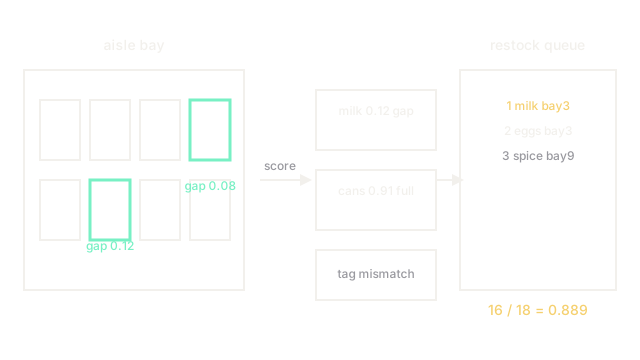
A 2,000 SKU supermarket loses sales when a shelf sits empty for four hours and loses margin when a price tag mismatches the scanner. Staff cannot stare at every aisle. Retail vision exists to turn ceiling and shelf cameras into task lists: aisle 7 bay 3 needs milk, bay 9 has the wrong tag, lane 2 needs a cashier.
Checkout differs from shelf. Object detection finds products. Multi-object tracking follows shoppers. This page is the store loop: shelf photos, fill scoring, planogram check, and a restock queue ranked by lost sales.
Basics first: a slot gets a fill score from 0 empty to 1 full. Scores below 0.3 fire a gap alert. The detector must handle glare, tilted boxes, and night refits. Accuracy is measured per slot, not per image.
Think of It Like This
A night auditor with a clipboard
A night auditor walks each aisle, taps empty slots, notes wrong tags, and leaves a prioritized list for the morning crew. Cameras are that auditor on loop every 15 minutes. The detector is the tap that judges empty or full. The queue is the morning list. The analogy stops at intent: the auditor knows a promotion starts Friday, while the model only sees pixels and needs that calendar feed.
How It Actually Works
Shelf cameras capture bays every 15 minutes. A detector finds each facing, classifies SKU, and scores fill. A planogram module aligns detections to the expected layout and flags missing facings, misplaced items, and tag mismatches via OCR on price rails. A ranking step sorts alerts by sales velocity times hours empty, so milk gaps outrank slow spices.
Occlusion and glare are the assumptions. Shoppers block views, freezer doors reflect. Systems keep the last clear view per slot and expire it after 30 minutes, then mark unknown rather than guessing.
Worked gap count
One aisle holds 120 slots with 18 true empty gaps at 10 am. The model fires 18 alerts: 16 true gaps and 2 false alarms on shadowed cans. Precision is 16 divided by 18 which equals 0.889. Recall is 16 divided by 18 which equals 0.889. Crews fix the top 10 by velocity and recover the mornings highest margin loss.
Watch Out For
Promo displays that break the planogram
Holiday end caps move 30 SKUs overnight and the layout check flags everything as misplaced. The symptom is hundreds of alerts on promo week with normal weeks quiet. Fix it by ingesting the promo calendar and by suspending layout penalties for flagged promo bays.
The Quick Version
- Retail vision scores each shelf slot for fill and checks layout and tags.
- Alerts rank by sales velocity so crews fix high loss gaps first.
- Our aisle caught 16 of 18 gaps with 2 false alarms, precision 0.889.
- Keep last clear view and expire unknowns under occlusion.
- Feed promo calendars or layout checks flood on display change.