Visual explainer
Generative Adversarial Networks
Two networks sharpen each other through contest: a forger turns noise into pictures while a judge learns to spot the fakes.
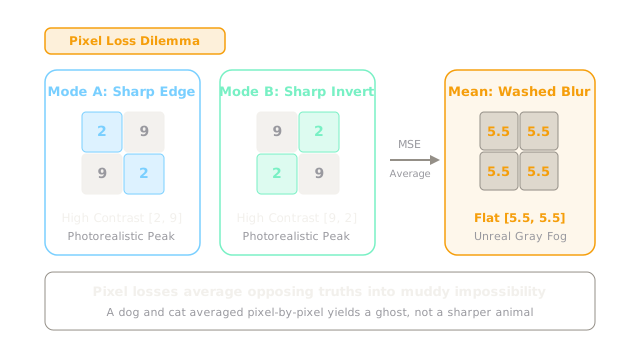
You cannot write an equation for realism. Train a plain loss on sharp A at 2, 9 and sharp B at 9, 2 and it outputs 5.5, 5.5, a gray blur. The average of two truths looks like neither.
Forger Meets Judge
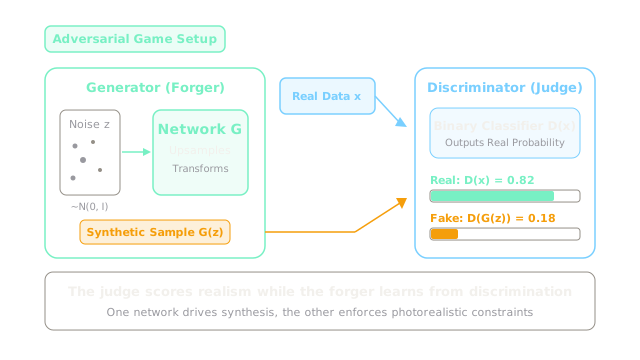
So you hire a judge instead of a formula. The forger builds pictures from pure noise, and the judge scores each input: 0.82 for a true photo, 0.18 for the latest fake. One creates, the other doubts.
Trading Wins
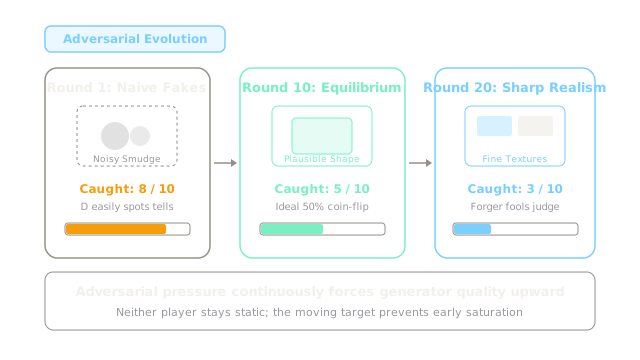
Nobody stands still. The judge learns each tell and catches 8 of 10 fakes, the forger adapts and only 5 get caught, then 3. No human writes new rules; the contest itself raises both games.
Signal Only
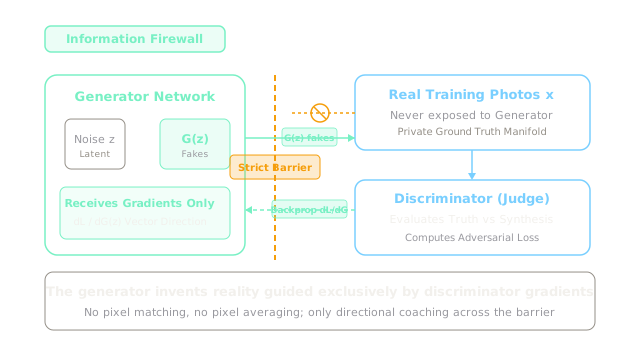
Here is the strict plumbing that keeps it honest. Real photos travel to the judge and stop there. The forger receives only coaching, a gradient saying warmer or colder, and never a single pixel.
Crisp Payoff
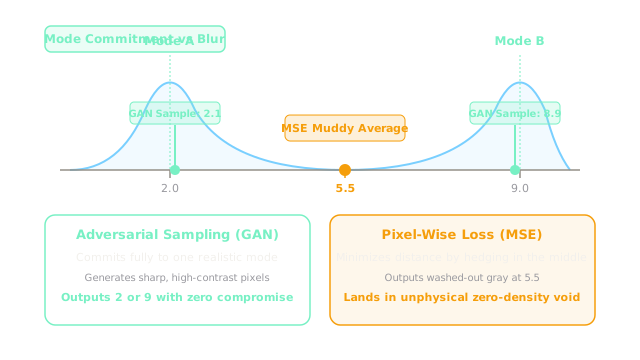
Because nothing is averaged, outputs stay decisive. One run commits to 2, the next to 9, never the 5.5 middle. That refusal to hedge is why these pictures look photographed, not painted.
Sharp Or Complete
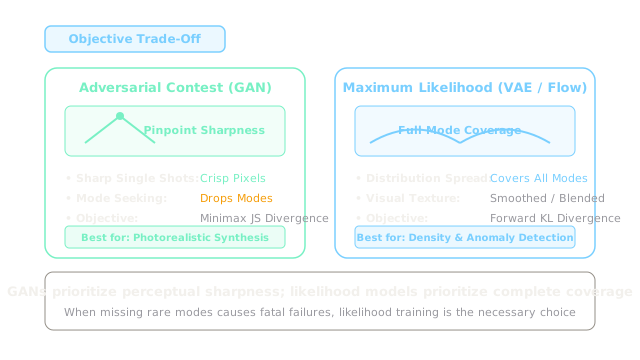
Choose by what failure you fear. The contest gives razor singles but may skip faces. Likelihood training covers every mode yet softens each one. If missing faces hurt more than soft ones, switch sides.
Where It Breaks
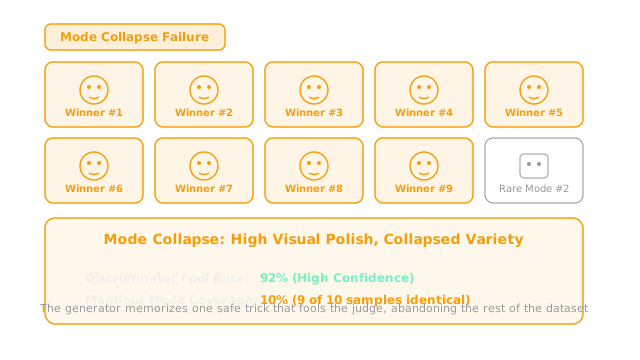
The classic collapse is comfort, not error. One face fools the judge, so the forger prints it 9 times out of 10. Quality looks perfect while variety quietly dies. Count your outputs, not just their polish.
The Quick Version
- No formula scores looks real.
- A forger fakes, a judge scores.
- Turns raise both games together.
- The forger gets coaching, never photos.
- Sampling stays sharp, never averaged.
- Sharp singles or full coverage, choose.
- One winner can crowd out all variety.